
CETEP Research
-

Valley Pathways Study: Building a Competitive, Clean Economy
Read what business and community leaders are saying about this landmark economy-wide study for parts of seven Southeast states which quantifies sources of greenhouse gas emissions by economic sectors and addresses the question – What would it take to reach net-zero emissions by 2050? Read the full report here
-

Economic Benefits of Trail Use at the Knoxville Urban Wilderness
By 2050, it is expected that 68% of the world’s population will live in urban areas.³ As we become more urbanized, the benefits that urban forests provide are becoming more important. They provide economic benefits to the local economy through tourism and recreation as well as supporting physical and mental health and improve urban air…
-

Stock Turnover and the Decarbonization of U.S. Passenger Vehicles
Relevant features that define how quickly the US can decarbonize passenger vehicles include the rate of stock turnover, defined as how quickly new vehicles replace scrapped used vehicles, and emissions from electricity production. Using 2002-2020 passenger vehicle registrations data, we document features suggesting that stock turnover has slowed down over time. We then build a…
-
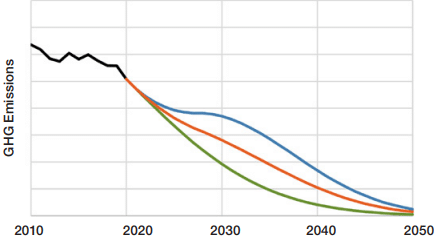
Valley Pathways Study: Building a Competitive, Clean Economy
The Tennessee Valley Authority and University of Tennessee Baker Center for Public Policy are partnering on a study to ensure a competitive and clean economy for the Tennessee Valley through 2050. Building on TVA’s reliable, resilient, low-cost, and increasingly clean energy, the study will: Build partnerships across all sectors of the Valley to move to…
-
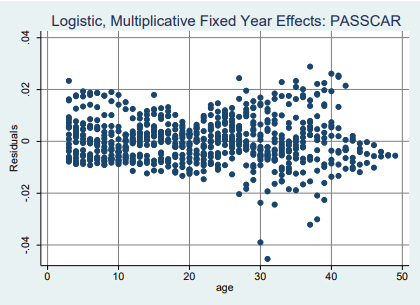
Statistical Estimation of Trends in Scrappage and Survival of U.S. Light-Duty Vehicles
We estimate models of scrappage rates and survival probabilities as a function of vehicle age for U.S. light-duty vehicles. We use counts of vehicles in operation by vehicle type and model year for calendar years 2002-2020, which allows us to estimate scrappage functions for years 2003-2020. We estimate models for three vehicle types: passenger cars,…
-
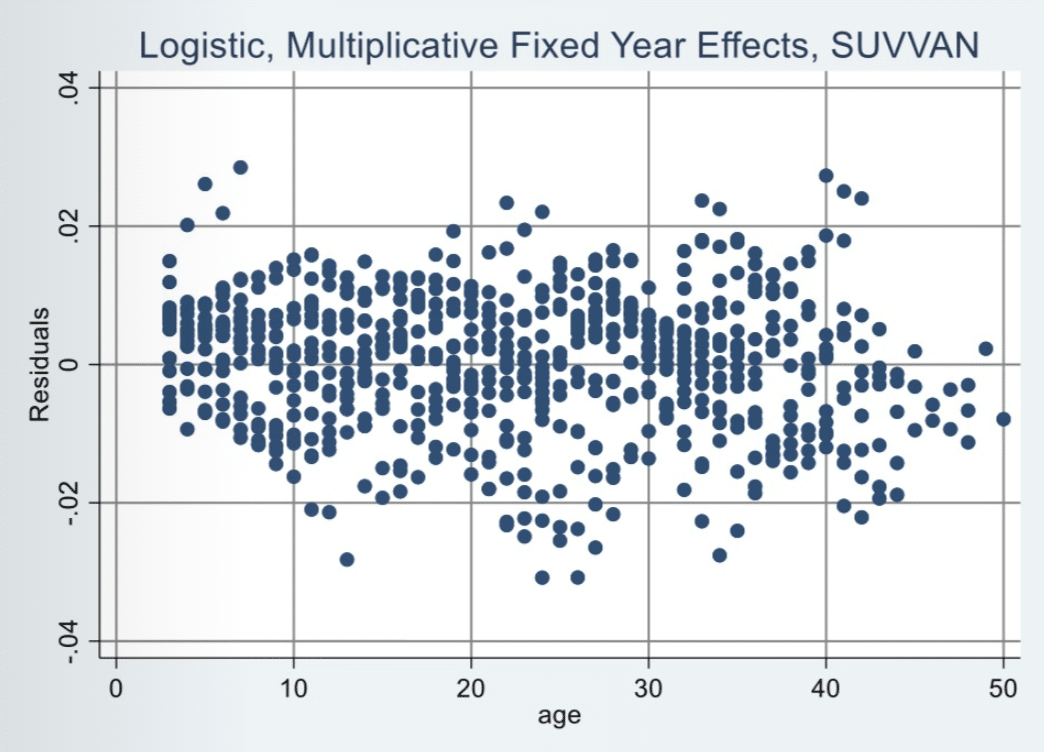
A Statistical Analysis of Trends in Light-duty Vehicle Scrappage and Survival: 2003-2020
This report presents the results of statistical models estimating scrappage rates and survival probabilities as a function of vehicle age for U.S. light-duty vehicles. Using vehicle counts by type and model year from 2002 to 2020, the analysis estimates scrappage functions for the 2003–2020 period. Separate models were developed for three vehicle categories: passenger cars,…
-

Economic Potential of the Tennessee RiverLine Water Trail
In 2016, University of Tennessee students in a landscape architecture course dreamed up a trail system that could connect residents to the region’s natural resources and connect communities to one another. Today, with guidance from faculty and support from our partners, that vision has turned into the Tennessee RiverLine—a 652-mile continuous system of water and…
-

Ensuring Natural Gas Capacity to Meet Tennessee’s Economic Development Needs
Reliance on natural gas has grown significantly in Tennessee and it will remain a key component of the state’s energy portfolio for the foreseeable future. Adequate and stable natural gas supplies, along with competitive prices and a safe system of distribution, will be essential to the state’s economic security and its future path of economic…
-

Does an Urban Wilderness Promote Gentrification? A Case Study from Knoxville, Tennessee, USA
The Knoxville Urban Wilderness (KUW) is a successful example of a growing global movement to utilize vacant urban land as many cities “de-urbanize”. A key question is whether this particular kind of green space promotes social inequality via green gentrification. Our analysis shows how the KUW has affected nearby home prices. Socioeconomic data including income,…
-
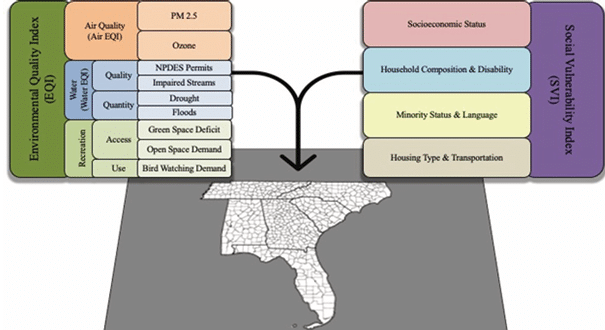
Associations Between Social Vulnerability and Environmental Quality in the Southeastern United States
A thorough understanding of the relationships between sociodemographic factors and environmental quality remains limited. Although previous research has examined individual sociodemographic and environmental quality indicators, comprehensive assessments of how these factors interact are still lacking. In this study, we used the Centers for Disease Control and Prevention’s (CDC) Social Vulnerability Index (SVI) and environmental quality…