
Publication: CETEP Economics
-

The Future of Electric Utilities
The electricity generation sector is in flux. Demand is flat, cheap natural gas is shuffling the generation stack. NIMBY-ism and policy uncertainty make it difficult to build new transmission and generation capacity. At the same time, there are deep structural changes afflicting the sector: decentralization, decarbonization, and digitization are interacting to overturn existing market structures…
-

Ratcheting Up Climate Efforts: Global Energy Investment Needs to Reach the Deep Decarbonization Targets of the Paris Agreement
The international policy community achieved a major milestone in 2015 with the passage of the Paris Agreement. Since that time, nearly 200 countries have signed or ratified the treaty, which aims to significantly reduce emissions of heat-trapping greenhouse gases over the next several decades. At the heart of the Agreement is Article 2.1. A number…
-
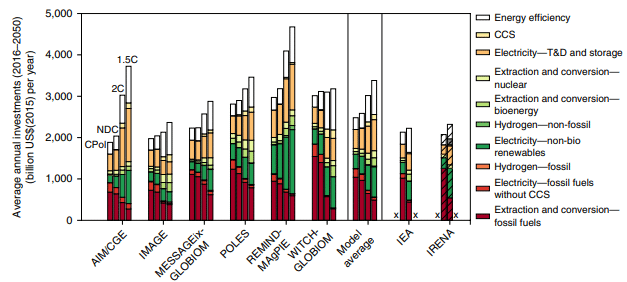
Energy Investment Needs for Fulfilling the Paris Agreement and Achieving the Sustainable Development Goals
Low-carbon investments are necessary for driving the energy system transformation that is called for by both the Paris Agreement and Sustainable Development Goals. Improving understanding of the scale and nature of these investments under diverging technology and policy futures is therefore of great importance to decision makers. Here, using six global modelling frameworks, we show…
-

Using Agent-Based Computational Economics to Understand the Evolution of the Electric Grid in Response to Increased Penetration of Distributed Solar Generation
This report summarizes recent research using agent-based computational economic modeling (ACE) in the electricity industry and illustrates how ACE can be used to investigate the dynamic response of a traditional electric grid in response to increased penetration of distributed solar generation. Using a hypothetical electric grid, the ACE model describes the dynamic behavior of four…
-
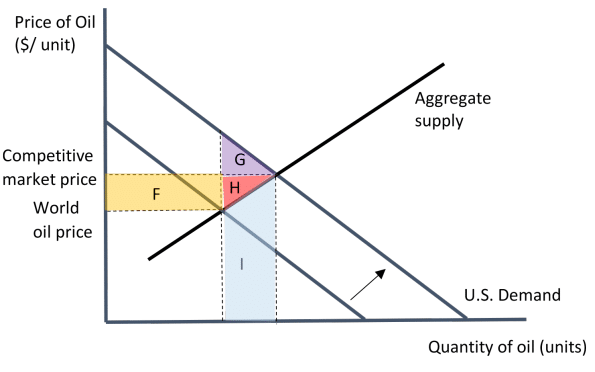
Reconciling Methods for Measuring U.S. Oil Dependence Costs
U.S. oil dependence has been an important topic at the nexus of energy policy, economic, policy and national security since the early 1970s (Deutch and Schlesinger 2006). Oil dependence typically refers to the percentage of domestic oil consumption that is imported.¹ As shown in Figure 1, the percentage of U.S. petroleum consumption supplied by foreign…
-

Estimating the Benefits of Fuel Economy Information: An Analysis, Update, and Recommendations for Enhancing ORNL’s Methodology
Since the mid-1970s, the federal government has produced and published information on the fuel economy of new passenger cars and light trucks as required by statute (EPA, 2017a). Beginning in 1999, the Department of Energy (DOE) and Oak Ridge National Laboratory (ORNL) established a website to more efficiently provide fuel economy information to the public.…
-

The Impact of Increased Fuel Economy for Light-Duty Vehicles on the Distribution of Income in the U.S.: A Retrospective and Prospective Analysis
In this study we investigate the impacts of fuel economy on income quintiles using data from Consumer Expenditures Surveys (CES) from 1980 to 2014. Decomposition analyses of household expenditures on vehicles and fuel quantify the factors causing changes for each income group over the past quarter century. Although the CES data allow us to separate…
-
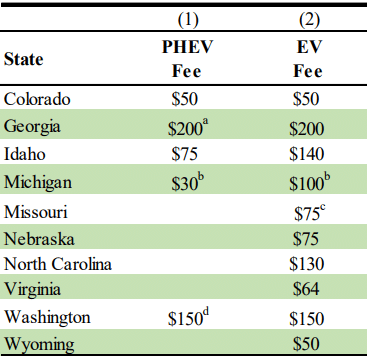
How Much Should Hybrids and Electric Vehicles Contribute to Roadway Funding?
Energy security and environmental concerns have led to a growing emphasis on alternative fuel vehicles. Particularly within the transportation sector, where gasoline consumption accounts for 47% of total U.S. petroleum consumption, there has been a shift to develop, incentivize, and assist in the adoption of vehicles that are not solely fueled by gasoline.¹ However, the…
-
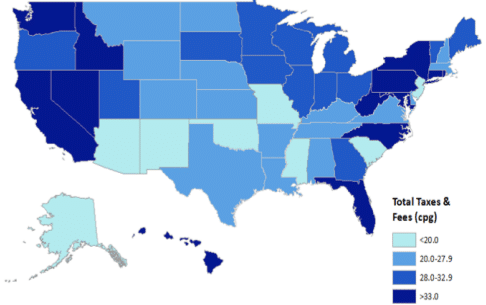
Tax Policies and Alternative Revenue Sources: State Responses to Declining Purchasing Power of Roadway Funding
In the past three years, most states have increased or introduced new taxes in order to boost transportation funding. These policy changes are largely in response to the declining purchasing power of traditional transportation funds stemming from gasoline and diesel taxes. This report provides a brief update and overview of roadway funding in Tennessee, with…
-

Why Is Energy Efficiency Such a Hard Sell?
The “energy efficiency gap” refers to consumers forgoing energy efficiency investments that yield a positive return. This report reviews the explanations for the energy efficiency gap and revisits one particular explanation – the role of uncertainty in future energy prices and energy efficiency capital costs. We update the option value analysis of Hassett and Metcalf…