
Publication: CETEP Transportation
-

Using Agent-Based Computational Economics to Understand the Evolution of the Electric Grid in Response to Increased Penetration of Distributed Solar Generation
This report summarizes recent research using agent-based computational economic modeling (ACE) in the electricity industry and illustrates how ACE can be used to investigate the dynamic response of a traditional electric grid in response to increased penetration of distributed solar generation. Using a hypothetical electric grid, the ACE model describes the dynamic behavior of four…
-
Reconciling Methods for Measuring U.S. Oil Dependence Costs
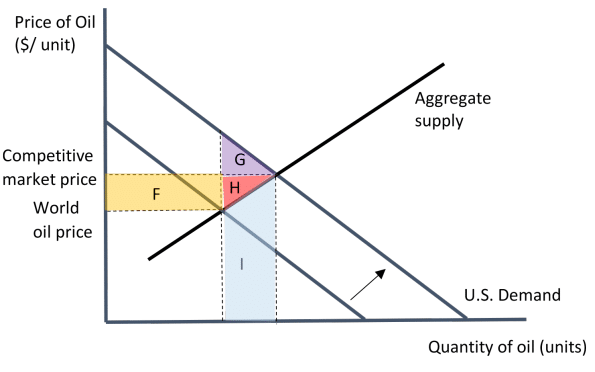
U.S. oil dependence has been an important topic at the nexus of energy policy, economic, policy and national security since the early 1970s (Deutch and Schlesinger 2006). Oil dependence typically refers to the percentage of domestic oil consumption that is imported.¹ As shown in Figure 1, the percentage of U.S. petroleum consumption supplied by foreign…
-

Estimating the Benefits of Fuel Economy Information: An Analysis, Update, and Recommendations for Enhancing ORNL’s Methodology
Since the mid-1970s, the federal government has produced and published information on the fuel economy of new passenger cars and light trucks as required by statute (EPA, 2017a). Beginning in 1999, the Department of Energy (DOE) and Oak Ridge National Laboratory (ORNL) established a website to more efficiently provide fuel economy information to the public.…
-

The Impact of Increased Fuel Economy for Light-Duty Vehicles on the Distribution of Income in the U.S.: A Retrospective and Prospective Analysis
In this study we investigate the impacts of fuel economy on income quintiles using data from Consumer Expenditures Surveys (CES) from 1980 to 2014. Decomposition analyses of household expenditures on vehicles and fuel quantify the factors causing changes for each income group over the past quarter century. Although the CES data allow us to separate…
-
How Much Should Hybrids and Electric Vehicles Contribute to Roadway Funding?
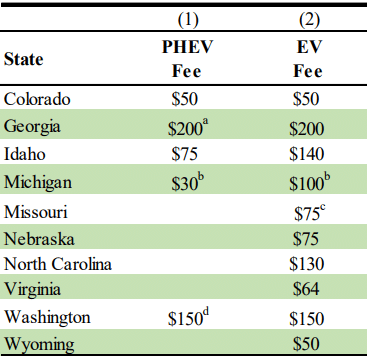
Energy security and environmental concerns have led to a growing emphasis on alternative fuel vehicles. Particularly within the transportation sector, where gasoline consumption accounts for 47% of total U.S. petroleum consumption, there has been a shift to develop, incentivize, and assist in the adoption of vehicles that are not solely fueled by gasoline.¹ However, the…
-
Tax Policies and Alternative Revenue Sources: State Responses to Declining Purchasing Power of Roadway Funding
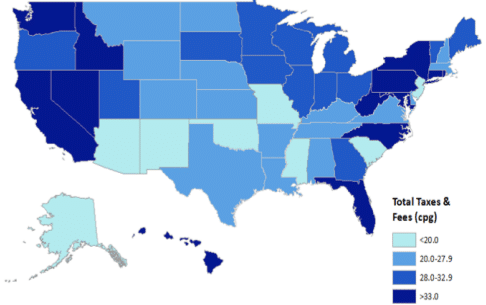
In the past three years, most states have increased or introduced new taxes in order to boost transportation funding. These policy changes are largely in response to the declining purchasing power of traditional transportation funds stemming from gasoline and diesel taxes. This report provides a brief update and overview of roadway funding in Tennessee, with…
-

Why Is Energy Efficiency Such a Hard Sell?
The “energy efficiency gap” refers to consumers forgoing energy efficiency investments that yield a positive return. This report reviews the explanations for the energy efficiency gap and revisits one particular explanation – the role of uncertainty in future energy prices and energy efficiency capital costs. We update the option value analysis of Hassett and Metcalf…
-

Measuring Flood Risk: What Are NYC Residents Willing to Pay for a Flood Protection System?
This policy brief evaluates how willingness to pay (WTP) for a flood protection system varies with exposure to flood risk, using detailed flood maps and parcel-level data to identify households within and just beyond the 100-year flood plain in New York City. The Federal Emergency Management Agency (FEMA) designates the 100-year flood plain as an…
-

The Economic Impact of Open Space on Residential Property Values in Tennessee
Open space covers more than 93% of Tennessee and provides numerous environmental and recreational benefits that are not directly reflected in market prices. This study examines how different types of open space influence nearby residential property values, offering insight into the economic value of conservation and informing land-use and public investment decisions. Results indicate that…
-
Economic Impact of the Proposed Crab Orchard Wind Farm on Cumberland County and Tennessee
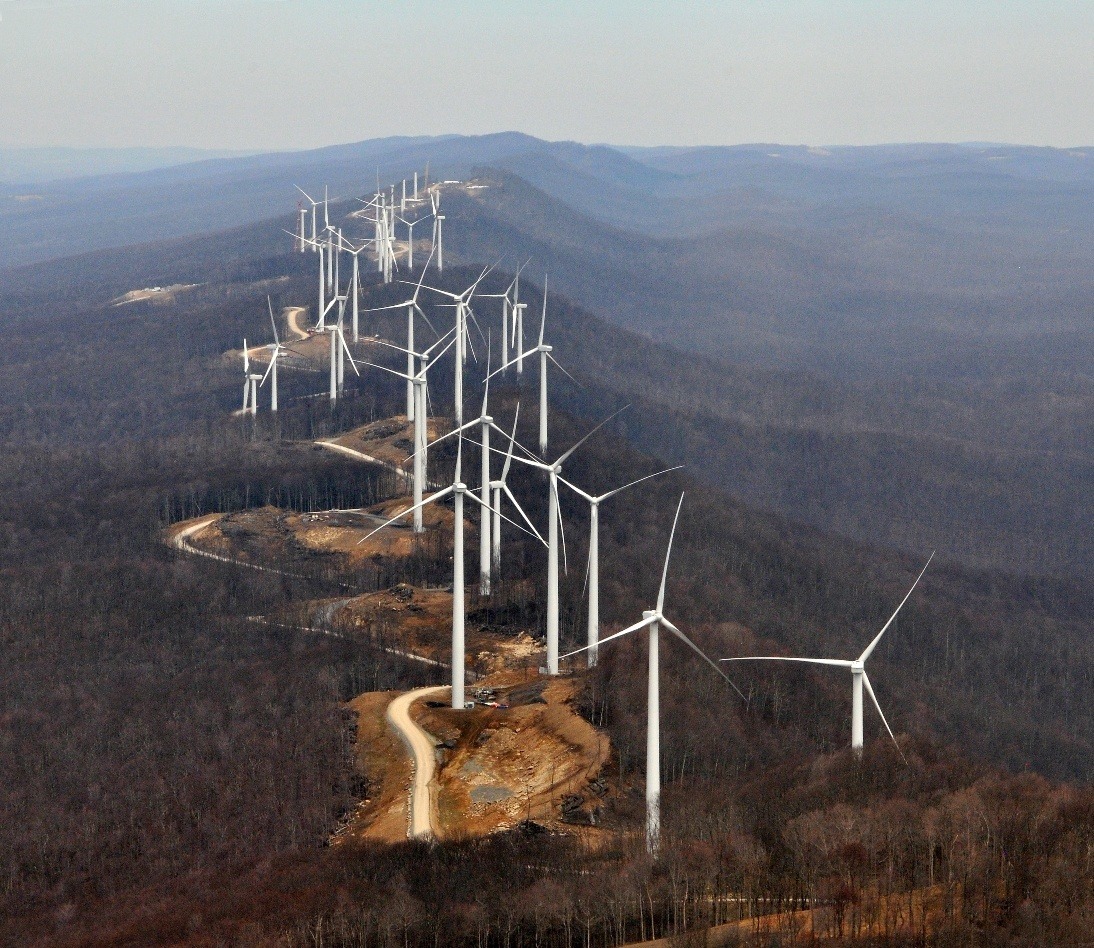
This study estimates the anticipated economic impacts of the proposed Crab Orchard Wind Farm, developed by Crab Orchard Wind, LLC, on Cumberland County and the state of Tennessee. Using economic impact analysis, the report evaluates the effects of both the construction phase and long-term operations on employment, personal income, gross domestic product (GDP), and state…